


Airtightness — why we care about it
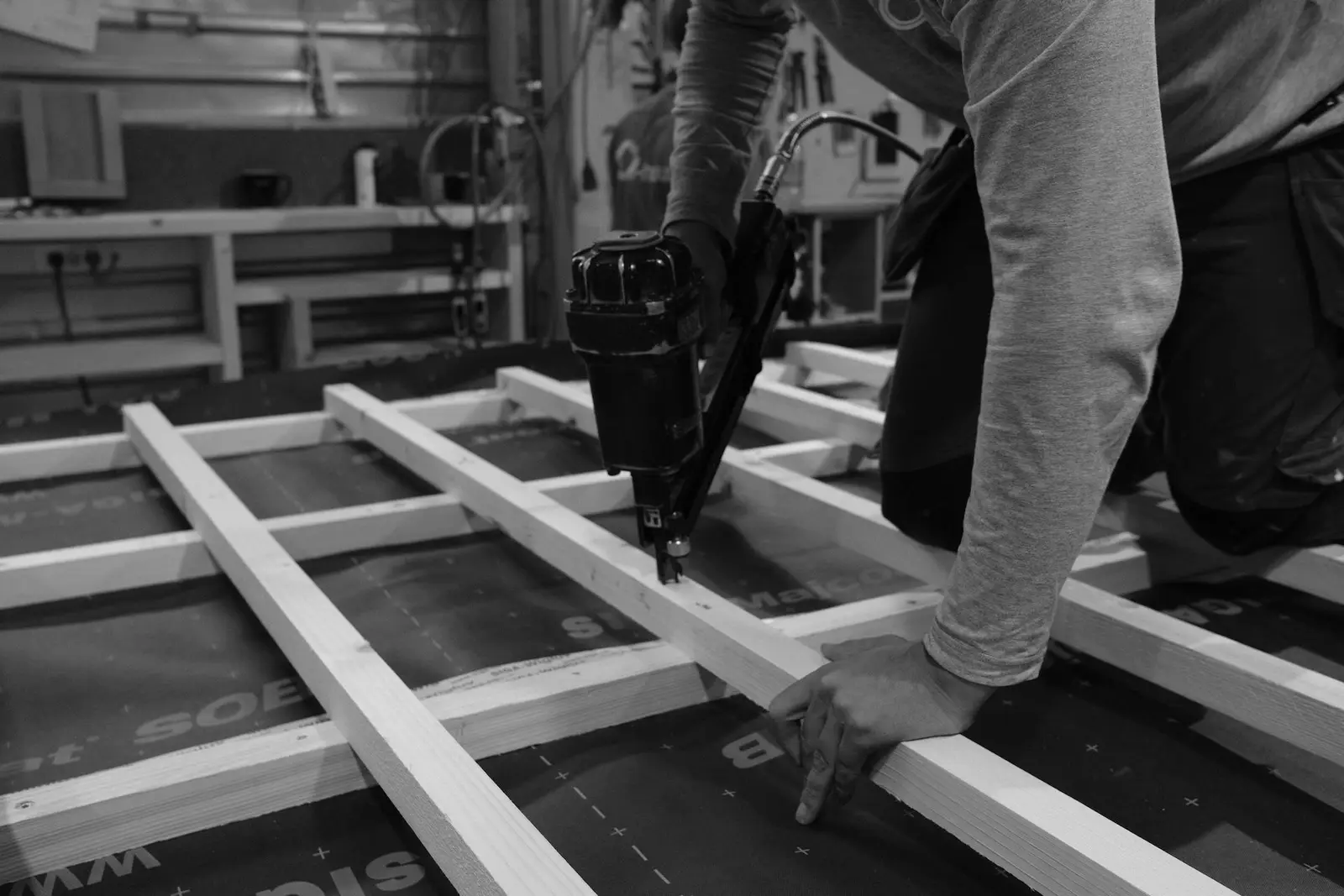
Airtightness is a fundamental property of a modern building, and it is the closest thing the industry has to an honest overall quality score. It cannot be faked, it cannot be added later, and it is measured on the finished building rather than claimed on a drawing.
Why it measures quality
A good airtightness result is only achievable through careful attention to every single connection. It depends on the design, and just as much on the people physically putting the assembly together on site.
Air is thin and will find any opening left uncovered. Walls and roofs are sealed with membranes, and those membranes have to be taped to each other — hundreds of metres of tape in a single house. With that much taping it is entirely possible to miss a spot.
Which is what makes the pressure test worth something. If the number is good, the membranes and tape went on correctly across the whole building. There is no partial credit.
What it actually buys you
Three things, in the order most owners come to care about them:
- Less cold air entering in winter — noticeably better comfort, particularly at floor level
- No condensation inside the wall where cold air would otherwise penetrate — which is what causes mould in warmer months
- No uncontrolled loss of warm air, which is uncontrolled loss of energy
Why prefabrication makes it harder, not easier
Almost everything is more controllable in a factory. Airtightness is the exception. When a building is assembled on site in one continuous process, sealing it is comparatively straightforward.
When it arrives as dozens of prefabricated elements, every joint between those elements has to be made airtight during assembly. That is genuinely more demanding than building it in place, and it is the one part of the result a factory cannot deliver on its own.
So no honest manufacturer can tell you in advance what a building will measure once it is closed up. It rests on the producer's experience and their track record on airtightness — which is a fair thing to ask any manufacturer for, including us.