


Element, panel, modular, timber frame — what to call it
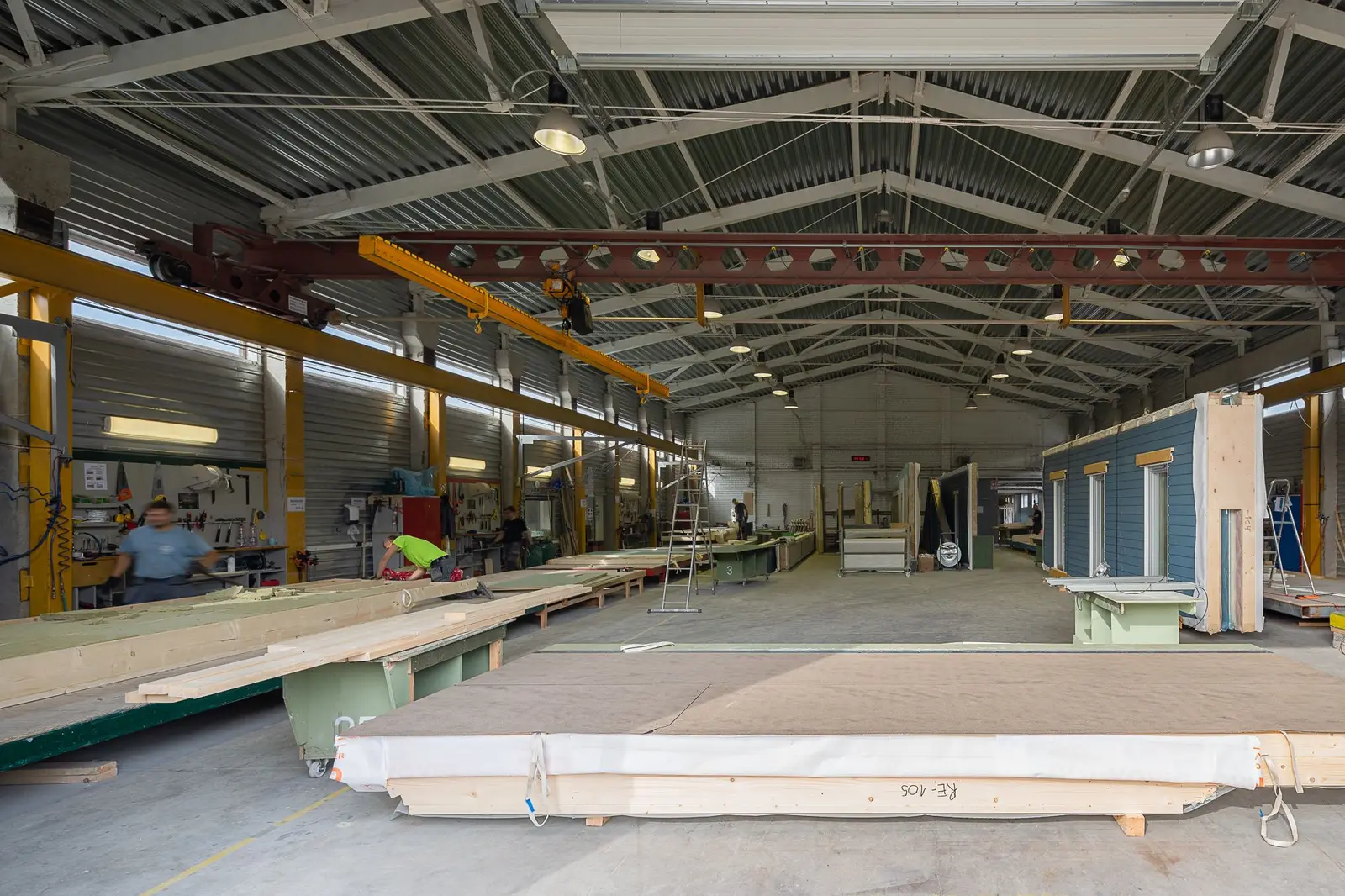
Prefabricated wooden houses go by at least five names, and buyers, architects and manufacturers all use them differently. The words are not interchangeable — each one specifies something different, and some specify almost nothing. Here is what each actually tells you.
Wooden house
Unambiguous about the material and silent about everything else. It does not tell you whether the house arrives prefabricated in assembled parts or as thousands of separate studs and beams, nor whether the structure is framed, massive glue-laminated panel, or log.
It remains one of the most common search terms for the product, which is exactly why it is a poor way to specify what you are buying.
Element house
Better: "element" says the house is prefabricated and arrives in parts. It still says nothing about how those elements are built, or even what they are made of — an element could be concrete.
In practice the term is used almost exclusively for lightweight timber construction, so the assumption is usually right. It is still an assumption.
Panel house
Almost the same as element house, with a shape attached. Most elements — walls, floors, roofs — are thin relative to their area, so they arrive as panels.
It is arguably the most accurate everyday description, and it is the least searched. Like the others, it tells you nothing about the structure inside the panel.
Modular house
The least accurate of the five, and the most used. "Modular" describes an architectural approach, not a material or a production technology: cubic volumes, and a design where the same module can be reused across different layouts and functions. The benefit is real — design cost falls and production optimises hard when you are making many near-identical modules.
Worth being clear, because we are asked constantly: we do build modular houses, and not everything we build is modular. A custom one-off is about as far from modular as it gets.
Timber frame house
The only term that specifies both material and structure at once: timber, in a framed structure, rather than massive panels. That makes it a better fit than "wooden house".
It still does not tell you whether the house is factory-made. Log houses are often described as timber framed when the only framed element is the roof.
So what should you ask?
None of the five settles the question that actually changes your price, your programme and your site work. That question is: how complete does it arrive?
Elements leave our factory as walls, floors and roofs to be assembled and finished on your site. Modules leave largely finished inside. Same material, same technology, entirely different logistics, lead time and division of work — which is why it is the first thing we ask before quoting anything.